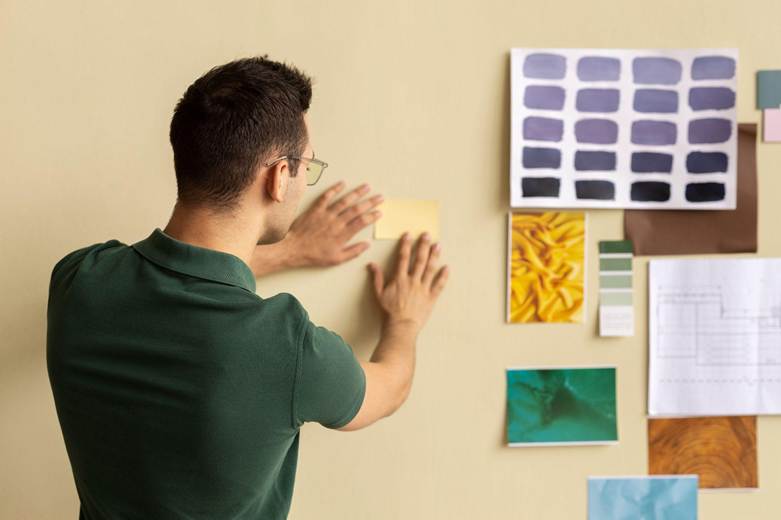
A finish can look convincing on a sample and noticeably different when repeated across an entire room. Chris Rapczynski explains that mockups can help project teams evaluate important design decisions at a more realistic scale before committing to full installation. In custom residential construction, this extra step can be particularly useful when materials, patterns, colors, and transitions have a significant effect on the finished space.
Mockups are not necessary for every decision. Their value is greatest when drawings and individual samples cannot fully communicate how several elements will look once they come together.
Small Samples Provide Limited Information
Material samples are essential during design, but they have limitations.
A small piece of stone may show its color without revealing how veining will appear across a large wall. One flooring board cannot demonstrate the amount of variation that will become visible throughout a room.
Scale changes perception.
A finish that appears subtle on a small sample may become visually dominant when repeated hundreds of times. Conversely, a material that seems highly varied individually may create a balanced appearance across a larger surface.
Mockups provide another layer of information between selecting a material and installing it permanently.
Natural Materials Benefit From a Larger View
Natural stone, wood, brick, and similar materials contain variation that is part of their appeal.
That variation also makes them difficult to judge from a single sample.
Stone slabs may contain dramatic changes in veining. Wood boards can vary in grain and tone. Brick may show differences in texture and color that become apparent only when several units are installed together.
A larger sample area can help determine whether the overall mix supports the intended design.
This can be especially important when several natural materials appear within the same view. Each material may look appropriate individually while creating too much variation when combined.
Pattern Decisions Become Clearer at Full Scale
Installation pattern can be just as important as material selection.
Tile may be installed in a grid, offset arrangement, herringbone pattern, or another configuration. Masonry can use different bonds. Wood flooring may vary in board width or direction.
Drawings can illustrate these patterns accurately, but experiencing them at a realistic scale provides different information.
A pattern that looks balanced on a page may feel too active across a large wall. An offset that seems minor in a drawing may become an important visual feature once repeated.
Mockups allow these relationships to be evaluated before they cover an entire surface.
Grout and Joint Details Can Change the Result
The material itself receives much of the attention during selection, while the spaces between materials can be overlooked.
Grout color and joint width can significantly influence tile. Mortar color and joint profiles affect masonry. Gaps, reveals, and shadow lines can alter the appearance of millwork or panel systems.
A contrasting grout can emphasize every tile individually. A closely matched grout can make the surface appear more continuous.
Neither approach is automatically better.
The appropriate choice depends on the desired effect, which is why seeing several combinations together can be more useful than choosing from isolated color samples.
Lighting Can Transform a Finish
Materials are rarely experienced under the same conditions in which they were selected.
Showrooms, offices, and digital screens may have very different lighting from the finished home.
Natural light changes throughout the day. Warm or cool artificial lighting can alter the perception of color. Directional light may emphasize texture that seemed subtle under diffuse illumination.
A mockup placed in or near the actual space can reveal these differences.
Paint, wood stain, stone, metal finishes, and textured surfaces can all respond noticeably to lighting conditions.
Reviewing a material under morning daylight, evening conditions, and intended artificial lighting can provide a more complete understanding of how it will actually appear.
Transitions Deserve Special Attention
Some of the most important details in a custom home occur where one material meets another.
Flooring may transition from wood to stone. Tile may terminate against painted drywall. Exterior masonry may meet metal, glass, or siding. Millwork may connect with plaster or another wall finish.
These intersections can look straightforward in drawings while requiring precise decisions in the field.
A transition may involve:
- Material thickness
- Edge treatment
- Alignment
- Joint width
- Trim profiles
- Reveals
- Changes in elevation
Testing the detail before widespread installation can reveal whether the transition looks intentional or requires refinement.
Mockups Help Establish a Workmanship Standard
Mockups are useful not only for choosing materials but also for clarifying how those materials should be installed.
Written specifications and drawings can describe expectations, but a completed sample creates a physical reference.
For example, a masonry mockup can demonstrate joint appearance and material distribution. A millwork sample can establish finish quality and edge details. A tile mockup can confirm layout, grout, and alignment.
Once approved, the mockup can serve as a benchmark for later work.
This can reduce ambiguity because the desired result is no longer represented only through drawings or verbal descriptions. The team has a tangible example to reference.
Testing Early Preserves More Options
The timing of a mockup matters.
If a concern is discovered before materials are ordered in large quantities or installation begins, there may be several practical alternatives.
A pattern can change. A grout color can be adjusted. A finish can be refined. A transition detail can be redesigned.
The same change becomes considerably more difficult after hundreds of square feet have been installed.
This is why mockups are most valuable when they are treated as part of decision-making rather than as confirmation after a decision has effectively become irreversible.
Not Every Detail Needs a Mockup
Creating physical tests for every material would add unnecessary time and complexity.
The better approach is to identify decisions with substantial visual impact or uncertainty.
Mockups may deserve consideration when:
- A material has significant natural variation
- Several finishes meet in one location
- A pattern will cover a large area
- Color is highly sensitive to lighting
- A custom detail has not been built before
- Installation quality will strongly affect appearance
- Changing completed work would be particularly difficult
Routine details with established methods may not require the same process.
The goal is selective verification, not testing for its own sake.
Digital Visualization and Physical Mockups Serve Different Purposes
Three-dimensional models and renderings can provide valuable insight into proportion, layout, color relationships, and the overall design.
Physical mockups answer different questions.
A rendering cannot fully reproduce the texture of stone, reflectivity of metal, depth of wood grain, or subtle variation in a handmade material. It also cannot demonstrate exactly how an installer will execute a particular joint or transition.
Digital visualization can help determine what the design should look like.
A physical mockup can help determine whether the selected materials and construction methods will actually produce that result.
Final Thoughts
Custom residential design often depends on details that appear minor until they are repeated throughout a room or building.
Stone variation, flooring direction, grout color, masonry joints, lighting, finish transitions, and installation techniques can all have a larger visual effect than an individual sample suggests.
Mockups create an opportunity to evaluate those decisions before they become permanent.
They can reveal unexpected material relationships, clarify workmanship expectations, and give project teams a common reference for important finishes.
Most importantly, they move certain decisions from imagination to observation. When a detail will have a significant effect on the finished home, seeing a realistic version before full installation can prevent a small uncertainty from becoming a large and difficult correction later.